Seoul-based. Bilingual. 500+ international cases since 2015.
Divorce proceedings in Korea involve procedural requirements, documentation standards, and legal rules that differ significantly from those in Western countries. Without fluent Korean and familiarity with Korean family law, there is a real risk of overlooking your rights — and errors made early in the process are difficult to reverse.
If any of the following applies to you, professional legal support is especially important. A specialist attorney can make a decisive difference in the outcome of your case.
Yeohae Law Firm communicates directly with clients in Korean, English, Vietnamese, Russian, and Chinese — without relying on interpreters for consultations. We have handled over 500 international family law cases across 30 courts nationwide since 2015.
Consultations
Cases Handled
Courts Represented
International family law cases handled since the firm's establishment in 2015, across all court levels throughout Korea.
Korean family law provides two paths to divorce. The right path depends on whether both spouses can agree on all terms. In either case, legal counsel from the outset protects your rights and prevents mistakes that become difficult to correct once the divorce is finalized.
| Consensual Divorce 협의이혼 | Contested Divorce 재판상 이혼 | |
|---|---|---|
| Requirement | Both spouses agree on all terms — custody, property, and support | One spouse files; statutory grounds required (infidelity, abandonment, abuse, etc.) |
| Timeline | 3–6 months, including the mandatory deliberation period | Approx. 8 months to 1 year 6 months; varies by complexity of custody and property disputes |
| Court appearance | One joint appearance before a Family Court judge to confirm the agreement | Attorneys appear on your behalf at most hearings. Personal attendance only required when the court specifically requests it (e.g., mediation) |
| Best for | Couples who can cooperate — but even consensual divorce benefits from legal review | Cases with disputed custody, contested property, or an uncooperative spouse |
| Even if you are considering consensual divorce: Agreements finalized without proper legal review often overlook pension entitlements, tax implications, or future child support adjustments. Yeohae Law Firm offers a premium Divorce by Agreement service that safeguards your legal interests while keeping the process efficient. | ||
When one or both spouses are not Korean nationals, the first question is which country's courts have authority to hear the divorce. Korean courts can take jurisdiction if the respondent spouse is habitually resident in Korea, or if both parties consent to Korean court proceedings. Getting this right at the outset matters: a Korean divorce judgment issued without proper jurisdictional basis may not be recognized in your home country. Yeohae Law Firm has handled cases involving jurisdictional questions between Korea and the United States, Canada, Vietnam, Russia, China, and other countries.
Korean family courts apply the "best interests of the child" standard under Article 837 of the Civil Act (민법 제837조). The court considers each parent's caregiving capacity, the child's current living environment, the child's own wishes (particularly from age 13), and each parent's ability to support the child's relationship with the other parent. Foreign nationality does not disadvantage a parent by itself, but presenting a compelling case in Korean legal proceedings requires preparation and expertise. See also: child custody in Korean courts.
Both spouses hold a right to claim a share of assets accumulated during the marriage, regardless of whose name appears on the title. This applies to Korean real estate, bank accounts, retirement savings, and business interests. Assets held abroad may also be factored into the division when they were formed during and as a result of the marriage. Identifying, valuing, and attributing assets — particularly where one spouse has not been transparent — is a core part of our case preparation. See also: property division in Korean divorce.
If you entered Korea on an F-6 marriage-based visa, divorce does not automatically trigger a deportation requirement. Korean immigration authorities consider your length of residence, whether you have children with Korean nationality or domicile, and how fault was attributed in the divorce proceedings. Multiple visa conversion paths may be available. Because your options narrow once the divorce is finalized, it is important to consult a lawyer before that point.
A judgment issued by a Korean family court can be recognized in many countries — including the United States, Canada, and Vietnam — provided the Korean proceedings met that country's procedural requirements. Conversely, a foreign divorce affecting Korean-registered matters (a child's family registry, Korean real property) may need additional steps to take effect in Korea. We coordinate with legal professionals in relevant jurisdictions to support cross-border recognition where needed.
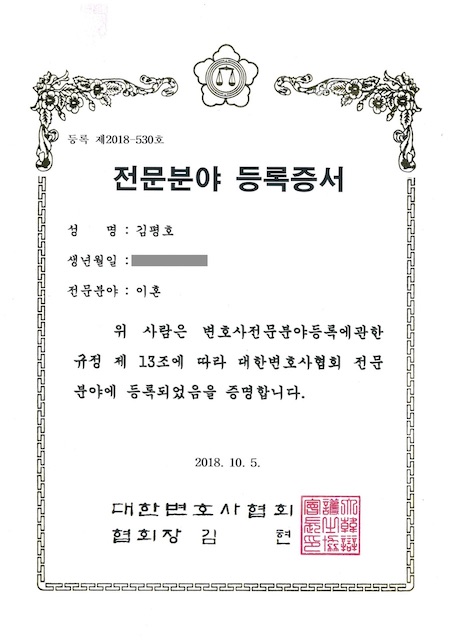
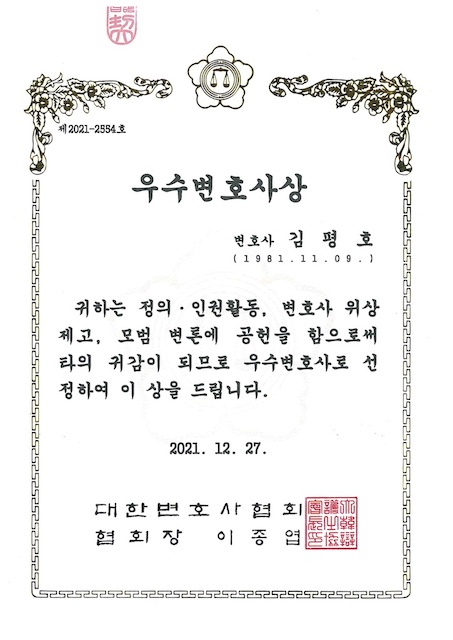
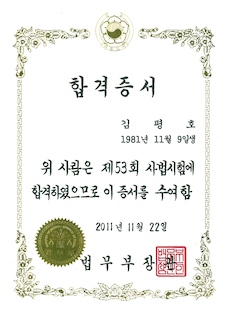
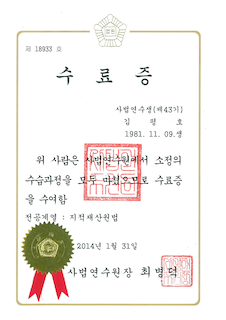
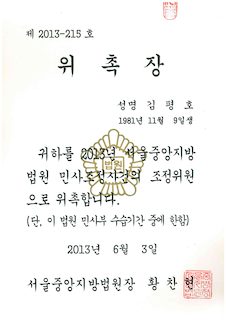
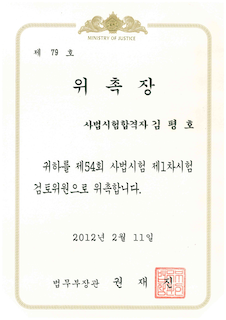
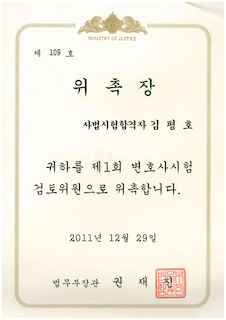
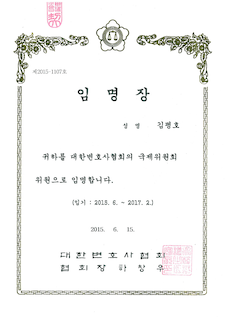
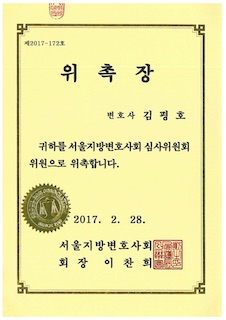
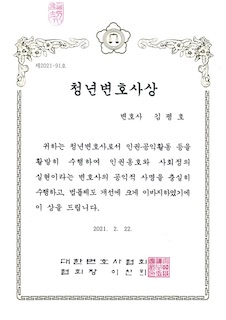
Pyoung-ho Kim, the Representative Attorney, holds a specialist certification in divorce law issued by the Korean Bar Association — recognition of demonstrated expertise and professional commitment in this field. He was further awarded both the Young Lawyer Award and the Excellent Lawyer Award by the Korean Bar Association in 2021 for his contribution to human rights and social justice.
Yes. Korean courts have jurisdiction when the respondent spouse is habitually resident in Korea, or when both parties consent to Korean jurisdiction. The applicable substantive law — Korean law or the law of your nationality — depends on the specific circumstances of the case.
Do not ignore Korean court notices, even if you cannot read them. Failing to respond can result in a default judgment being entered against you. Even if you are currently outside Korea, you can be represented by an attorney throughout the proceedings — you do not need to appear in person at most hearings. Contact a Korean lawyer as soon as possible.
Contested divorce proceedings typically take approximately 8 months to 1 year 6 months at the trial court level, depending on how disputed the custody and property issues are. Cases may continue to the High Court or Supreme Court on appeal, which extends the overall timeline.
In most contested divorce proceedings, our attorneys appear on your behalf at hearings — personal attendance by the client is not required for the majority of the process. Personal attendance is only required in exceptional circumstances where the court specifically requests the parties to appear, such as certain mediation sessions. This arrangement is particularly important for clients residing outside Korea.
Not automatically. Korean immigration authorities consider your length of residence in Korea, whether you have children with Korean citizenship or domicile, and how fault was attributed in the divorce. Several visa conversion paths may be available. Consulting with an attorney before the divorce is finalized keeps your options open.
Pyoung-ho Kim, Representative Attorney, received the Excellent Lawyer Award from the Korean Bar Association in recognition of his passion and devotion to his cases and clients. We provide specialized lawyer services for all foreigners in Korea.
Yeohae Law Firm was established to serve clients whose legal needs cross borders. International family law is our core practice area — not a secondary specialization — and every attorney and staff member who works with international clients communicates directly in Korean, English, Vietnamese, Russian, or Chinese without interpreter intermediaries.
Every case is analyzed individually. We review the applicable jurisdiction, identify the assets and custody issues involved, assess immigration implications, and build a strategy that fits your specific situation from the outset. We have represented clients across 30 courts throughout Korea since 2015, and we maintain working relationships with legal professionals in relevant jurisdictions to ensure that outcomes reached in Korea can be properly recognized abroad when needed.
In addition to contested divorce, we handle consensual divorce, international child custody, cross-border property division, and post-divorce matters including recognition of Korean judgments abroad.
240-348-9181 (US/Canada) | 02-537-2370 (Korea)
Business hours: Mon–Fri, 9:30–18:00
Email: info@leesunsin.com